
Discover Brancusi’s Legacy



Brancusi - In his time ans Ours - Foreword
The author of this book is essentially a scientist. Doctor engineer Doina Frumuselu published, as a single author or as co-author, over 20 books and over 80 articles both in Romania and in other countries, becoming better known abroad than in her own country, if we were to quote the title of an interview presented in the third part of this book. In 2002, she was awarded with a Doctoral degree. Her professional achievements are remarkable, since she is also the author of two patents.
1/4/20264 min read
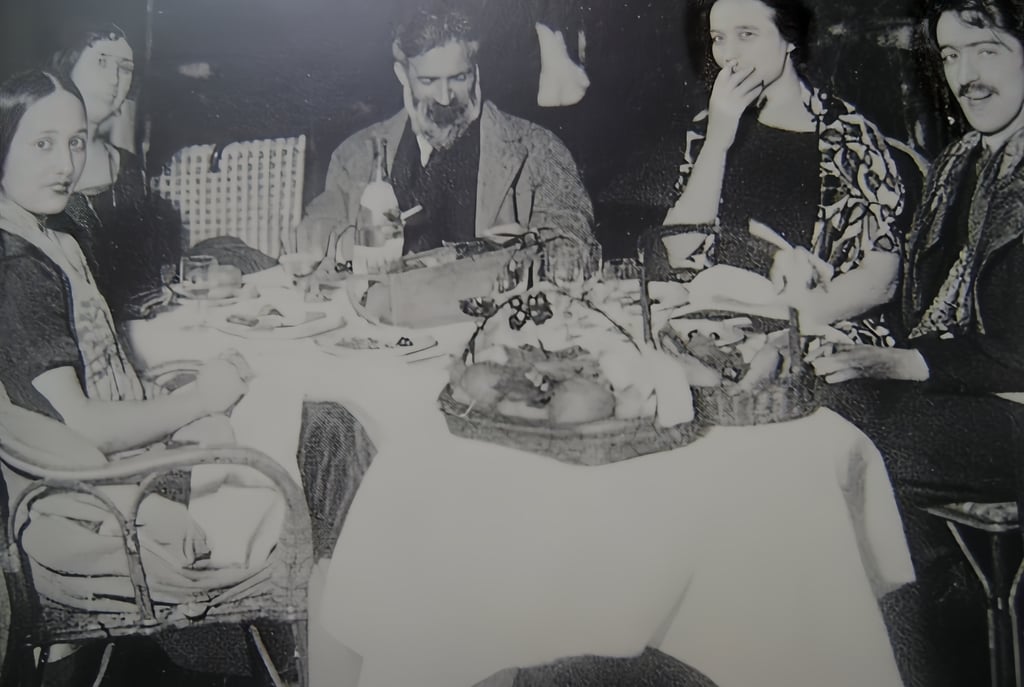
Ever since her early youth, Doina Frumuselu, as a genuine daughter of the Gorj county, showed a keen interest in the life and the work of Constantin Brancusi, “the great creator of the 20th century sculpture” (Encyclopedia Universalis France). Through hard work doubled by passion, she managed to become a famous Brancusi- specialist.
Additionally, the passion for the creations of Constantin Brancusi, “the major artist of the 20th century” (Jacques Lassaigne), led her to design and elaborate a technology for restoring the Endless Column in Targu-Jiu without disassembling it, a proposal which, unfortunately, she did not manage to impose. She also devised a solution for the restoration of Constantin Brancusi’s house in Hobita. In fact, these projects are presented in detail in two chapters of the present book.
Mrs. Doina Frumuselu has authored several books on Constantin Brancusi, some of them being quite comprehensive, as it is the case of the present endeavour. Another work of crucial importance, which was also published as a result of the efforts made by the Cultural Association - “Constantin Brancusi”, was entitled Brancusi in the World Consciousness - Endless Bibliography, and appeared in 2007 at the “Orizonturi Universitare” publishing house. The book was launched at the “Orizonturi Universitare” book fair in 2007, and was also presented by the author herself on the 16th of February 2008 at the honorary symposium organized in Timisoara on the occasion of the great sculptor’s birthday.
The book Brancusi in his time and ours is another precious result of the research carried out by Doina Frumuselu, who has always been deeply concerned with Brancusi as a person, as well as with his creations and the various acts of aggression they have suffered. The author tried to reveal the inner universe of this man and artistic genius in a less common manner, through the agency of the elite female women who had been part of his life. Brancusi was charmed by the elite female representatives of his time, in whom he also found important sources of creative inspiration. Doina Frumuselu wrote about Brancusi’s romantic relationships, about the eternal feminine in the sculptor’s life and creations.
The sculptor himself said that “love calls for love, it is not so important that you get love, but that you yourself offer love with all your soul and with all your strength.”
In line with her previous writings, the author presents the artist’s life and work with utmost respect. “… it is the respect imposed by the modesty and the dignity of his life, by the greatness of his work. Just as Brancusi himself was of the opinion that the artist cannot start working unless he is in a state of purity, serenity, preceded by meditation and asceticism, we have the same feeling that we have to prepare ourselves in order to get closer to him and that each of our contributions only matters as long as it involves an act of honouring…” (Jacques Lassaigne in Carte de inimă pentru Brâncuși [Heart-Felt Book for Brancusi]).
This is the approach adopted by another important Brancusi- specialist, namely Dumitru Daba, who, in his book Adevărul Brâncuși [The Truth Brancusi], (Editura de Vest, Timisoara, 2006), stated that “the first and foremost critic must be considered to be Brancusi himself”. He also stressed that “what was achieved in the context of the natural sciences of this latest and huge century by so many extraordinary minds from great schools and research centres all over the world, in a common effort towards knowledge creation and knowledge deepening which has no precedent in the history of humanity, Brancusi accomplished by himself in the domain of arts … Because Brancusi, being perfectly aware both of the revolutionary modernization produced by his new type of art, and of the apathy of our (“classic”) mentality, considered that the deep significance of the former would only be really understood decades or even centuries later. This is exactly the reason why the interpretation of Brancusi’s art cannot (and must not) be ever considered “completed”, finalized, since it constantly develops together with today’s and especially tomorrow’s new perspectives. Because Brancusi is, undoubtedly, “an absolute beginner” (Tudor Arghezi), who, as usually in such cases, needs time to be understood and accepted … Was he a demigod, and that was why he confronted ministers, kings, governments? Was he a prophet, a saint, a demiurge – as his critics called him? Maybe he was all these. But, if the human condition means living your life in mystery and revelation, in order to fulfill your creative destiny, being able to give up on everything for that (“even to the point of self-destruction” – Lucian Blaga), then Brancusi was, first and foremost, a HUMAN BEING. As the brilliant sculptor himself confesses: “I was meant to do what I am doing today. Because I came in this world with a mission …”
We would like to thank Mrs. Doina Frumuselu for the intense work that she has devoted to the study of Brancusi. This work has found its concretization in this recent book, which is very interesting, which is illustrated with numerous photographs, and which gives us an overview of the brilliant sculptor’s universe.
We should also thank economist Sevastian Balescu, a son of Gorj, who has constantly promoted the consolidation of the associative environment in Romania by means of The Scientific Association for the Consolidation of the Associative Environment, which he leads and through which he organizes important honorary events every year. Such an event was the above-mentioned Symposium organized in 2008, dedicated to Brancusi and Gheorghe Magheru, where Doina Frumuselu presented her book Brancusi in the World Consciousness - Endless Bibliography. Another result of the efforts made by Sevastian Bălescu was the organization in Timisoara, on the 17 of March 2012, of a commemorative symposium “Constantin Brancusi” marking 55 years since the sculptor’s death. Doina Frumuselu was also present at this symposium, and that occasion can be regarded as the first launch in our city of the work Brancusi in his time and ours, which has been printed now at Eurostampa publishing house, both in Romanian and in English.
We also acknowledge the financial support offered by the Timis County Council, which, by means of the Cultural Agenda 2012, covered an important part of the publication costs.
I also want to thank the staff members of the Eurostampa publishing house, who have shown considerable interest and professionalism in editing and printing the book Brancusi in his time and ours.
Horia CIOCARLIE
President of the Cultural Association “Constantin Brancusi”, Timisoara
Other articles you may like
Contact
For any questions, contact us here.
Follow us
Subscribe
© 2025. All Rights Reserved.